

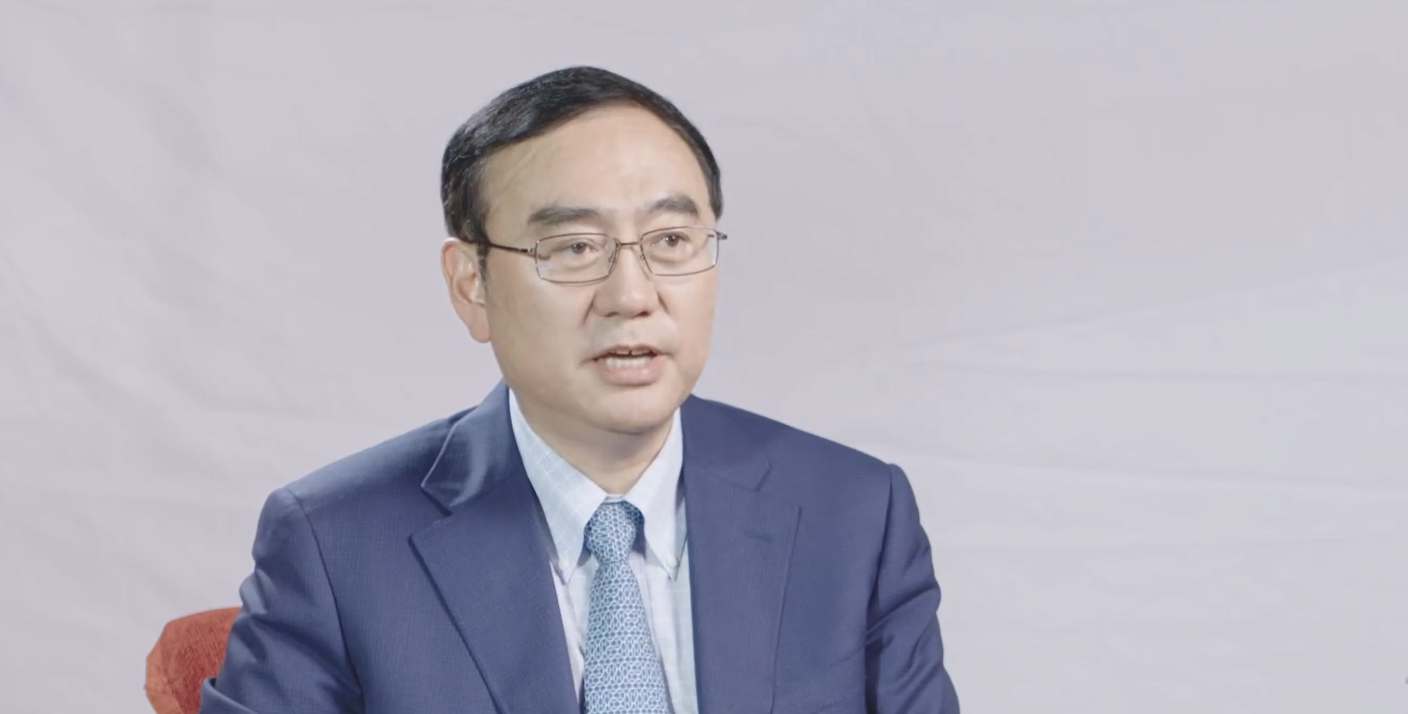
To understand how the China’s medical community is addressing the country’s growing cancer challenges, Roche Diagnostics recently spoke with Prof Hao Xiaoke, Chief Scientist at Greater Xi’An Area Medical Diagnostic Lab Center.
Prof Hao argues that the intelligent use of cancer diagnostics, which facilitate early screening and preventative care, will be essential for addressing the government’s ambitious cancer control targets. He observes that local organisations like the National Health Commission, the Chinese Society of Clinical Oncology, and the China Anti-cancer Association are working to promote the rational use of serum tumour markers, which remain a central and well-established component of any cancer detection toolkit.
“We are now considering how to generate new ideas based on the old methods and how to use the old methods in a new way,” he notes. “For example, how can we reasonably combine tumour markers? Can we redefine the role of tumour markers in the whole concomitant diagnosis?”
Prof Hao also discusses liquid biopsy, a “promising new detection method” that examines circulating tumour cells (CTC), ctDNA, ctRNA and/or extracellular vesicles (or exosomes). He acknowledges that more clinical validation is needed for many use cases and shares updates on the numerous studies his team has completed or is conducting in this area.
“Tumour detection has entered the era of individualisation,” he enthuses. “We should start from the clinical needs and gradually change from single-gene detection to multi-gene detection and then to large panel detection.”
To help make this dream of precision medicine a reality, Prof Hao believes that clinical labs must become “smart” by adopting the latest information and automation technologies. Earlier this year, his team collaborated with the China Society of Medical Laboratory Equipment to help set up the Laboratory Intelligent Testing Committee, a multi-stakeholder consortium that includes hospital laboratory departments, IVD manufacturers and internet companies.
“Our goal is to build an Industry-University-Research Collaboration platform and promote the development of digital and intelligent laboratories,” he shares. “Laboratory big data is still an undeveloped gold mine.”


