



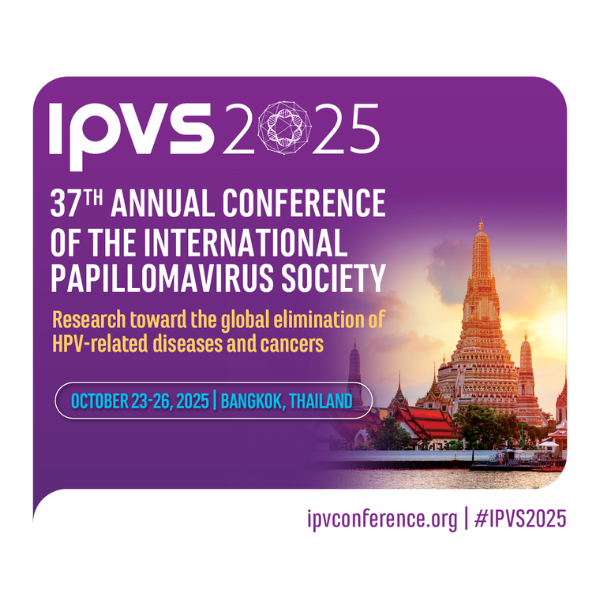
The 37th Annual Conference of the International Papillomavirus Society (IPVS 2025) was held recently in Bangkok, Thailand. Delegates from all over the world attended to share the vital work they have been contributing towards the elimination of cervical cancer.
The Lab Insights team attended the conference, and here are some key takeaways from the conference.
HPV self-sampling is more prevalent than ever
It is well established that cervical cancer elimination will not be achieved by any of the three pillars of the World Health Organisation’s elimination goal in isolation – screening is inextricably linked to treatment. But what is the strategy when traditional methods for primary screening have been exhausted? Self-sampling appears to be the solution here.
Australia has been at the forefront of cervical cancer elimination. On track to eliminating cervical cancer by 2035, they owe this to several key factors. They were the first country globally to launch an organised school-based HPV vaccination programme, switched primary screening methods from pap smears to HPV DNA tests (reducing need for re-testing from every 2 years to 5 years), and transitioning to a nationwide cancer screening registry that reduced the loss to follow-up. Professor Deborah Bateson of the Sydney Medical School at The University of Sydney discusses the use of HPV self-sampling as a way to reach under and never-screened people in conjunction with novel approaches for screening programmes to ensure care reaches every woman in need. While the implementation of such a programme requires resources and careful change management processes, the results are well worth it. Post implementation, the programme saw 46% of samples taken from self-collection sources and reaching those who would otherwise have been missed.
In Malaysia, Professor Woo Yin Ling of the University of Malaya expands on the very successful Programme Rose that her foundation has been running since 2019. In addition to the extensive field work that the programme conducts, Professor Woo is passionate about addressing perceptions, educating and communicating facts about cervical cancer effectively to all. With these, the women they reach in under-served communities are able to better understand their own health needs and are better empowered to make decisions. To date, Professor Woo has taken the programme to various settings, such as places of worship, and even corporate offices. Even for remote and hard to reach places, where it could be hard for women to travel, the programme stops at nothing, “we can go by boat, by air, by river, to reach the women”, says Professor Woo.
Click here to watch their talks at IPVS 2025.
AI tools increasingly being explored for various stages of elimination
The use of artificial intelligence (AI) in aid of screening, diagnosis and treatment was widely talked about in this year’s congress. One such example of AI at work is shown in The HPV-Automated Visual Evaluation (PAVE) study, as part of a larger consortium is a cervical screening research effort specifically targeting resource-limited settings. Dr Frederica Inturrisi, of the MSF Foundation in France, presented the study. The PAVE study uses an AI-based visual evaluation with a HPV diagnostic test for a risk-based management approach. With the two pieces of information, women who have been screened can know their level of risk, and resources can be prioritised for treatment. AI is helpful here for a multitude of reasons, and can range from aiding in classification because of interpretation differences between CIN2 and CIN3 to low resource setting and lack of skilled labour. The study was conducted in 9 countries with 50,450 women screened; results from the study are pending, though a pre-print is available here [1].
Historically, AI is deployed on existing or growing databases to see if any patterns can be detected. However, these data sources can be skewed towards a majority while leaving out minorities. Drugs are then researched and developed based on these databases, leaving out a major gap. Dr Manasi A-Ratnaparkhe, CEO and Co-Founder of PAICON [2], aims to create an inclusive oncology dataset, one where it levels a playing field for AI to take effect. “AI should work for everyone, not just a selected group” says Dr A-Ratnaparkhe. Currently, 16% of caucasian populations represent 82% of the training datasets, and this has led to real world ramifications of exclusion in research and development that results in over 500,000 lives lost per year. PAICON is also using AI in cervical cancer, and has teamed up with ETiCCS (Emerging Technologies in Cervical Cancer Screening), a non-profit initiative of Heidelberg University, to launch OncoPath, an initiative to better improve cervical cancer screening and treatment in Sub-Saharan Africa.
The growing interest in leveraging AI for cervical cancer management is exciting and holds great promise. However, to translate this potential into reliable clinical practice, it is paramount that studies remain dedicated to ensuring the highest quality of input data. As with any powerful tool, the principle of ‘garbage in, garbage out’ applies: high-quality data is a non-negotiable prerequisite for generating dependable, high-quality AI outputs.
Eliminating cervical cancer in the Asia-Oceanic region through AOGIN
Countries in the Asia-Oceanic region have also added more rigour in their efforts to eliminate cervical cancer. For lower-middle income countries (LMICs), cost has always been a significant barrier to widespread access in HPV screening. Coupled with large test volumes and logistical challenges like the lack of sophisticated lab set-ups, a significant number of patients are usually lost in timely follow-up and treatment. With this in mind, Professor Neerja Bhatla of All India’s Institute of Medical Sciences’s Obstetrics and Gynaecology department stressed affordable testing is “the need of the hour”.
To address the cost issue, the consensus in the AOGIN region is to shift away from traditional pap smear and cytology and into HPV testing methods, reinforcing the increasing prevalence of HPV self-sampling as a solution. Professor Woo Yin Ling shared that “HPV testing is deemed the only way to reach women in certain regions in their lifetime. Cytology is effective only if a woman returns for screening approximately 15 times in her life,” stressing that cytology alone (50% sensitivity) might miss half of the population who potentially have HPV, as opposed to HPV testing (90% sensitivity) [3].
Prioritising HPV tests over traditional methods isn’t enough. Innovative delivery models and decentralised care pathways are also key factors in achieving widespread, cost-effective screening, especially in larger regions. China, despite its massive population, has been at the forefront of this shift since 2014, endorsing self-sampling as the preferred screening method.
Professor Youlin Qiao, School of Population Medicine and Public Health at China’s Peking Union Medical College, cited an interesting framework combining self-sampling and screen-and-treat strategy. Despite its huge population, self-sampling has enabled China to screen for cervical cancer even in remote areas via innovative delivery models. An internet-based self-sampling model mails out PCR-based HrHPV DNA testing kits to underserved areas, making cervical cancer screening more accessible even in remote areas. Additionally, self-collected samples have shown comparable accuracy, sensitivity, and specificity to clinician-collected samples, particularly for CIN2+ and CIN3+ cases [4]. Cost-effectiveness modeling shows that combining self-sampling with screen-and-treat methods (like thermal ablation) is the most immediate cost-effective strategy for cervical prevention in China [5].
In the case of two upazilas in Bangladesh, even with relatively low prevalence (3.1% to 3.3%) of high-risk HPV, the sheer size of the target demographic (estimated 30 million women) means that approximately 960,000 women will still require intervention. The inadequacy of the current method, Visual Inspection Acetic Acid (VIA), which missed nearly half of HrHPV-positive women in a pilot study, combined with socioeconomic barriers (distance, taboo, lack of guardian) make timely follow-up a challenge. Gynaecological oncologist Professor Ashrafun Nessa of Bangladesh Medical University recommended that prevention strategy should be multi-faceted, calling for the formal integration of HrHPV-based screening to the current national programme (targeting women aged 35-45), and that the sample collection and treatment – via Thermal Ablation – should be decentralised and conducted at community clinics and sub-district health centres. She also advocates the establishment of a clear referral pathway for complex cases, ideally in collaboration with social support agencies, to help navigate women unsuitable for thermal ablation to colposcopy clinics or higher-level facilities [6].
While the scientific community has delivered powerful new tools — from effective vaccines and advanced diagnostics to innovative treatment models — the core challenge is now implementation. The key consensus from IPVS 2025 is that achieving the global elimination of HPV-related cancers hinges on deploying these great tools through sustainable and equitable strategies that are tailored to the unique economic and social realities of every country.
Reference List:
[1] Befano, B. et al. (2025) ‘Initial evaluation of a new cervical screening strategy combining human papillomavirus genotyping and automated visual evaluation: The human papillomavirus–automated visual evaluation consortium’, JNCI: Journal of the National Cancer Institute, 117(10), pp. 2124–2129. doi:10.1093/jnci/djaf054.
[2] PAICON. Available at: https://www.paicon.com/ (Accessed: 14 January 2026).
[3] Woo, Y.L. et al. (2022) ‘The implementation of a primary HPV self-testing cervical screening program in Malaysia through program rose—lessons learnt and moving forward’, Current Oncology, 29(10), pp. 7379–7387. doi:10.3390/curroncol29100579.
[4] Zhao, X. et al. (2020) ‘Comparative performance evaluation of different HPV tests and triaging strategies using self‐samples and feasibility assessment of thermal ablation in “Colposcopy and treat” approach: A population‐based study in rural China’, International Journal of Cancer, 147(5), pp. 1275–1285. doi:10.1002/ijc.32881.
[5] Zhao, X.L. et al. (2023) ‘Cost-effectiveness of the screen-and-treat strategies using HPV test linked to thermal ablation for cervical cancer prevention in China: A modeling study’, BMC Medicine, 21(1). doi:10.1186/s12916-023-02840-8.
[6] Nessa, A. et al. (2025) ‘High-risk human papillomavirus genotypes among women of Hill districts in Bangladesh’, PLOS One, 20(12). doi:10.1371/journal.pone.0338092.


