



At any time, managing a supply chain to ensure that clinical laboratories have ready access to the tests, reagents, and consumables they need to meet diagnostic demand can be a challenge — and that’s a challenge shared by healthcare systems, manufacturing companies, distributors, and even individual labs.
But in a pandemic, that challenge becomes a minute-by-minute, white-knuckle terror. As COVID-19 swept across the globe in early 2020, diagnostics manufacturers developing and distributing tests for SARS-CoV-2 realised that demand was skyrocketing. Supplies, of course, were not.
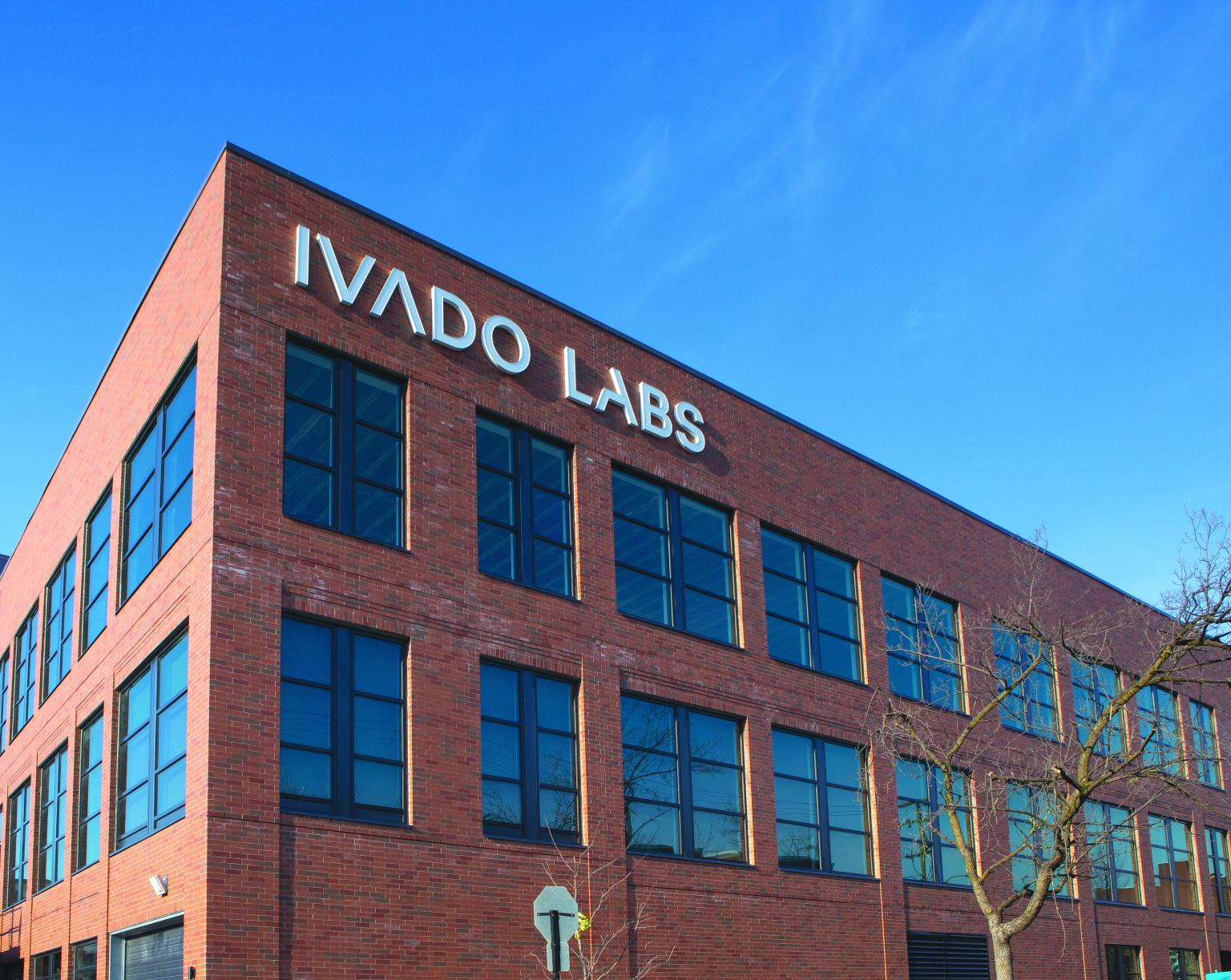
In Canada, a unique alliance between a leading diagnostics manufacturer and IVADO Labs, a consultancy that specialises in artificial intelligence (AI), paved the way for a predictive model that could allocate tests, reagents, and consumables in a fairer and more rational way. While the approach was stress-tested in the worst possible conditions, it could also be useful for supply chain management for a broad range of clinical lab needs during normal times.
As the pandemic spread across North America in early 2020, the IVD manufacturer’s Canadian affiliate was allocated a limited and fixed number of SARS-CoV-2 tests per week to serve that country. But parceling them out wasn’t easy. Each test required nearly a dozen consumables and reagents to run, and those had to be distributed in exactly the right proportions to ensure that all these tests could be used by clinical labs each week.
Optimising the mix of tests, consumables, and reagents wasn’t the only goal. The team knew that the limited allocation of tests wouldn’t be enough to meet the local demand, but they wanted to allocate them in a way that didn’t leave out certain labs or communities. That’s when they turned to IVADO Labs.
Typically, the AI experts at IVADO Labs help organisations forecast their supply chains more accurately in order to optimise revenue. But that wasn’t the case for this project. “It was not about revenue,” says Andrea Lodi, Co-Founder and Scientific Director of IVADO Labs. “The only important part was to be able to deliver to people, ensuring that products get to the right place at the right time and ultimately to serve patients where testing was most needed.” The need to accomplish this in Canada was so pressing that Lodi and his colleagues were eager to help.
But even for AI aficionados who specialise in supply chain management, this project was no easy feat. The IVADO Labs team typically likes to build an AI model from two years’ worth of sales data to capture seasonality and any other factors that have an impact on supply and demand. For SARS-CoV-2 tests, they had just two weeks of data, recalls Jack Klejka, Director of Product Management at IVADO Labs. They incorporated more data over time as the project went along, and factored in test protocols to understand which reagents and consumables were needed.
“It wasn’t about having something perfect right away,” Klejka says. “We kept expanding the complexity as we went along.”
The IVADO Labs team chose two reference points to help guide decision-making: (a) the usage capacity of every lab, and (b) the infection prevalence based on the number of positive cases per capita in each province. The AI model would use this basis along with a great deal of other information to predict testing needs and allocate supply accordingly. If there was an outbreak in one part of the country, the model would adjust, surging tests there while reducing supply to areas of less need.
In the crucible of COVID-19, IVADO Labs delivered a model in record time — and their novel approach worked. Just eight weeks into its deployment, the AI model improved accuracy more than 80% and improved testing capacity, on average, by as much as 10%. The accuracy of the AI was impressive: predictions typically varied from actual consumption by less than 20 kits per week. And customers in labs were happier because allocation volatility from week to week was reduced by 78%, boosting stability and making it easier for them to plan their resources.
Based on the success of this project, IVADO Labs is already discussing how to expand the AI-powered supply chain prediction model to other tests and other countries. “When we started this project, it became clear that there’s so much more potential beyond COVID-19,” says Klejka. “Any time you capture data, there’s an opportunity to optimise something.”
Lodi and Klejka wish to acknowledge other team members at IVADO Labs that made this project possible, including Helene Desmarais, Arnold Liwanag, Guy Desaulniers, Guillaume Rabusseau, Parnaz Tabrizian, Florian Soudan, Nabila Remli, Shima Nikfal and Benoit Bourbeau.


