


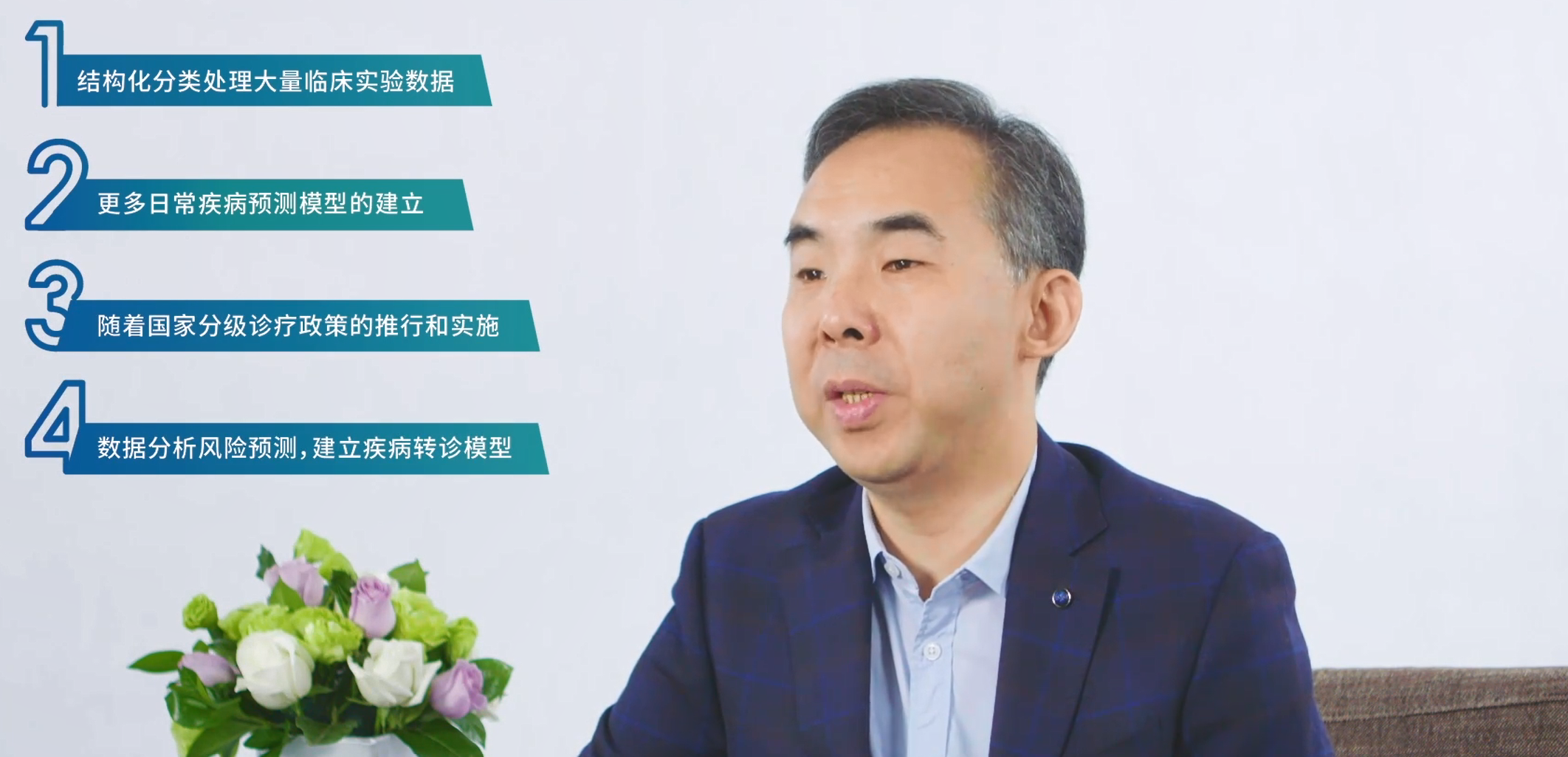
We often hear that clinical lab data can be aggregated and analysed to improve patient care and healthcare systems management. In this recent interview with Roche Diagnostics, Prof Yi Zhang, Director of the Clinical Laboratory at Qilu Hospital in Shangdong University, discusses some of the specific opportunities.
Prof Zhang’s lab, which is affiliated with one of China’s top teaching hospitals, makes considerable effort to clean and classify his data—including fragmented, unstructured and heterogeneous data—in order to facilitate data mining and artificial intelligence applications.
“The integrity, coherence, integration of these data, as well as the scientific and structured preservation of data, are very important for the subsequent data mining,” he says.
By carefully managing clinical lab data, and forming multidisciplinary teams with the skills to exploit it, lab professionals can help develop new tools for disease prediction, preventative care, precision medicine, clinical decision support, clinical research, utilisation management and other functions.
Prof Zhang believes that China has some of the right ingredients to make these capabilities a reality. “The state attaches great importance to the formulation of big data policies,” he says. “Since 2013, about 70 big data-related policies have been issued.”
Even so, Prof Zhang does not believe that big data and AI are a silver bullet for all healthcare challenges. “We should be rational about AI instead of relying too much on it,” he concedes. He also pursues lean management and other approaches to ensure his lab operates smoothly and fulfills its responsibilities to patients.


